
Solar panels in 2026: the honest numbers on payback, savings and what's changed
A deep dive into the true cost and returns of UK domestic solar energy in 2026, examining battery integration, Smart Export Guarantee rates, and the critical factors that dictate whether an installation is a sound investment.

The shift in solar economics: Why 2026 is different
Five years ago, solar in the UK was often dismissed as a romantic, long-term project with a fifteen-year payback period that relied heavily on subsidies. In 2026, the maths has quietly but decisively transformed. We are no longer operating in an era of Feed-in Tariffs or government handouts; instead, we are seeing a market driven by hardware efficiency, plummeting battery costs, and a sophisticated energy retail landscape. For a typical UK household, solar has moved from being a green enthusiast's hobby to a calculated financial decision that rivals traditional savings accounts in terms of annual yield.
What a typical install costs now
A 4kW system on a standard three-bedroom semi currently averages £5,800–£7,200 fitted, which includes the necessary scaffolding, the solar inverter, and full MCS certification. If you opt for a 4kW system paired with a 5kWh battery storage unit, the cost rises to between £9,000 and £11,000. It is crucial to note that battery prices have fallen sharply—roughly 40% since 2022—due to the mass-market adoption of LFP (Lithium Iron Phosphate) chemistry. This storage is no longer just a luxury; it is the lynchpin of your return on investment. By capturing the energy generated during the day for use in the evening, you insulate yourself from peak-rate grid electricity, which remains significantly more expensive than the cost of self-generated power.
The reality of generation and self-consumption
For an average UK household consuming 2,700 kWh of electricity annually, a 4kW system will generate approximately 3,400 kWh. Without a battery, you will likely self-consume only 35–45% of this generation, as most solar energy is produced when the house is empty. Adding a 5kWh battery shifts this self-consumption rate to 75–85%. This metric is the most important factor in your payback calculation. While exporting electricity via the Smart Export Guarantee (SEG) is beneficial, current rates—ranging from 15p to 17p per kWh from suppliers like Octopus, EDF, and E.ON Next—are invariably lower than the price you pay to pull electricity from the grid. Therefore, every unit you consume yourself is worth 25–30p, whereas every unit you export is worth only 15–17p. Your focus must be on maximizing usage behind the meter.
Where the maths breaks down and risk increases
Solar is not a universal solution. The economics fail if your roof faces north or is obstructed by significant shading from trees or neighbouring properties. In these cases, your generation will never reach the levels required to meet the payback windows mentioned here. Furthermore, if you are planning to move house within five years, solar may be a poor investment. While the value added to a property is real, estate agents and surveyors currently estimate that you will only recoup roughly 60–70% of the installation cost in the sale price. Unless you plan to stay long enough to see the system pay for itself through bill savings, the transaction costs of the installation will leave you out of pocket. Lastly, check your home’s electrical infrastructure; if your fuse board is aged or wiring is non-compliant, an installer may require a consumer unit upgrade before signing off, which can add £500–£1,000 to your quote.
The decision framework: How to prepare
Before you commit, follow this framework to ensure your numbers hold up. First, obtain three quotes exclusively from MCS-accredited installers. Anyone without MCS certification should be avoided, as you will be ineligible for the Smart Export Guarantee, effectively cutting off your secondary income stream. Second, demand a PVGIS (Photovoltaic Geographical Information System) estimate specific to your exact postcode, roof orientation, and pitch. General national averages are frequently inflated by salespeople to make the return look faster than it is. Finally, remember that your SEG provider does not need to be your equipment installer. Shop around for the best export tariff separately, as rates change frequently and the difference between the best and worst deals can cost you hundreds of pounds over the life of the system.
The bottom line
Solar in 2026 is no longer a leap of faith for the average UK homeowner. If you have a well-oriented roof and intend to remain in your property for at least a decade, the numbers now stack up as a sound financial investment. Approach this as a medium-term strategy for reducing your reliance on volatile grid prices, and you will see the system pay for itself well within its two-decade operational lifespan.
One email. Every Sunday. The tips that actually save UK households money.
More on energy & bills

What the October 2026 Energy Policy Changes Mean for Your Household Budget
New government announcements are set to alter how we pay for gas and electricity. Here is a breakdown of what the recent policy shifts mean for your monthly bills.

How to check if your energy supplier is correctly applying the Price Cap
With the October 2026 energy price cap rise, many households are confused about their bills. Here is how to verify if your supplier is charging you within the legal limits.
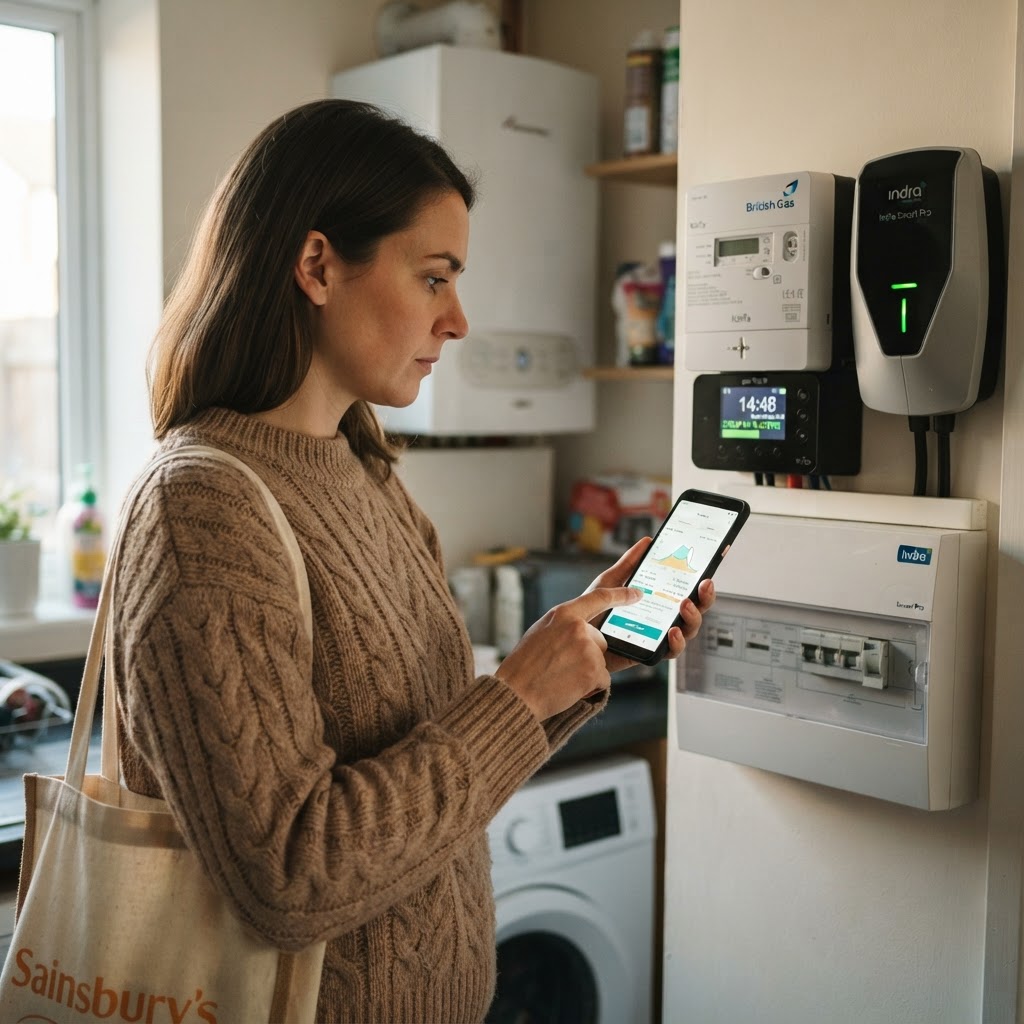
How to switch to a time-of-use energy tariff in the UK
Moving to a time-of-use tariff could significantly lower your annual bills if you can shift your major energy usage to off-peak hours.