
Essential Tips for Saving on Your Weekly Grocery Shop in the UK
Learn actionable strategies to reduce your grocery bill while ensuring you still enjoy quality food. Discover practical tips for smarter shopping and meal planning.

Understand Your Shopping Habits
The first step in reducing your grocery expenses is to understand your shopping habits. Keep a record of how much you spend weekly and what items you typically buy. This will illuminate where you can make changes. Consider using an app or a simple spreadsheet to record your expenditures. Knowing your financial habits is crucial—it’s always easier to adjust when you know exactly where your money goes.
Create a Budget and Stick to It
Establishing a weekly or monthly grocery budget is essential. For example, if you currently spend £80 per week, consider setting a goal to reduce this to £60. This £20 cut could result in around £1,040 saved annually. Remember to account for inflation and price increases, which can erode your budget.
Once you set a budget, try to stick to it. List all the items you need and avoid impulse purchases. When shopping, bring cash or set a limit on your card to keep your spending in check.
Embrace Meal Planning
Meal planning is an effective way to ensure that you only buy what you need. Take some time each week to plan your meals, using ingredients that overlap to reduce waste. For instance, if you plan to have pasta twice in a week, purchase a larger pack to meet both meals without wasting any. Meal planning can save you £250 a year according to many budgeting forums.
Try to prepare a shopping list based on your meal plan before heading to the store. Stick to this list, and avoid shopping when you’re hungry to reduce the likelihood of purchasing unnecessary items.
Use Discounts, Coupons, and Loyalty Schemes
Take full advantage of the discounts and loyalty schemes available in most supermarkets. Stores like Tesco, Sainsbury’s, and Morrisons often offer loyalty cards that can accumulate points for future discounts. For instance, with Tesco Clubcard, you can earn points on your purchases that can turn into vouchers to save on your next shop.
Additionally, look for cashback apps such as CheckoutSmart or Quidco. Many users report savings of around £50-£100 per year by utilising these apps when purchasing groceries.
Don’t ignore newspapers and coupon websites either. Publications often print valuable coupons that can lead to significant savings when added to your regular shop.
Shop Seasonal and Local Products
Shopping for seasonal fruits and vegetables can drastically reduce costs while still ensuring freshness and quality. For example, buying strawberries in June may cost significantly less than in February. Local markets also often have lower prices since they may not include the same transportation and import fees that larger retailers do.
Consider switching to a smaller, local supermarket or farm shop occasionally—they often have pricier goods but great deals on certain items, particularly fresh produce. Engaging in a local vegetable box scheme may also offer significant savings compared to mainstream grocery prices.
Reduce Waste with Smart Practices
Wasting food is wasting money. Focus on consumption first and foremost—know which items have shorter shelf lives and use these before others. Also, consider freezing leftovers or buying smaller quantities to avoid spoilage. Items like bread can be frozen immediately if you don’t plan to consume them soon.
The Love Food Hate Waste campaign suggests that a UK household could save approximately £700 each year by reducing food waste. Adopt practices like making a list based on what needs to be used first, or having a ‘leftovers night’ to ensure nothing is unnecessarily thrown out.
Conclusion
By understanding your shopping habits, creating a budget, embracing meal planning, using discounts, shopping seasonally, and reducing waste, you can significantly lower your grocery spending. Combined, these strategies can realistically save you over £1,500 per year, leaving you with more money for other expenses or savings.
Stay proactive and reassess your strategies regularly to adapt to price changes and your household needs. Everyone’s financial landscape is different, so find what works best for you and keep refining your approach to grocery shopping.
One email. Every Sunday. The tips that actually save UK households money.
More on food & groceries

How to make the most of 'wonky' veg boxes and supermarket 'ugly' produce ranges in 2026
Buying imperfect fruit and vegetables can slash your weekly grocery bill by up to 30 percent while helping reduce household waste.
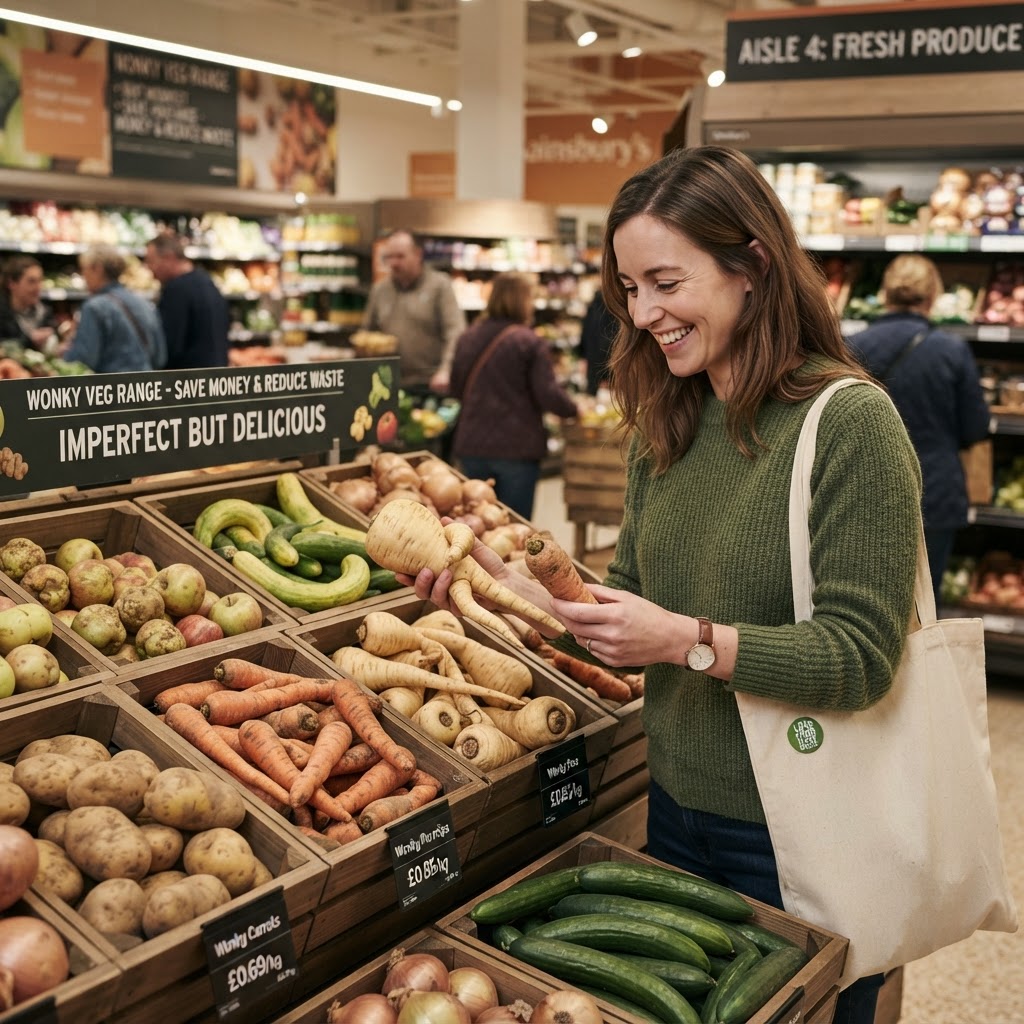
How to make the most of UK supermarket 'misshapen' fruit and veg ranges
Buying imperfect produce from UK supermarkets is a simple way to reduce your grocery bill without compromising on nutrition. Here is how to navigate these ranges to maximise your savings.

How to legally use 'Too Good To Go' and 'Olio' for massive grocery savings in the UK
Surplus food apps are transforming how households shop by offering significant discounts on fresh goods that would otherwise be binned. Here is how to use them effectively to cut your weekly bill.