
How to claim back excessive vehicle recovery and storage fees in the UK
If your car has been impounded or towed by police or local councils, you may be entitled to a partial refund if fees exceed legal limits. Here is how to challenge unreasonable costs.
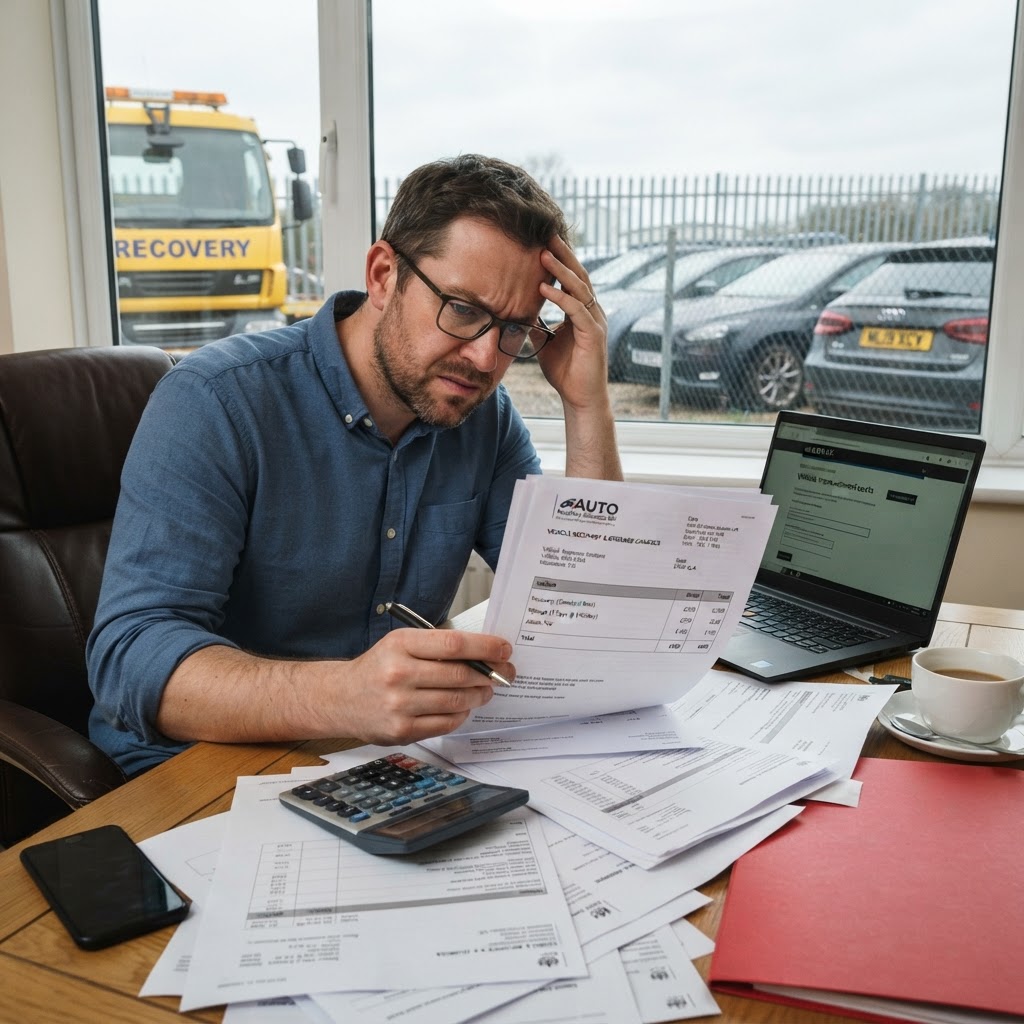
Know your rights under the Road Traffic Regulation Act 1984
When your vehicle is removed by the police or a local authority due to an alleged traffic offence or for being an obstruction, you are hit with a statutory release fee. However, many motorists assume that whatever the recovery operator demands is final. It is not. Under the Road Traffic Regulation Act 1984 and the Removal, Storage and Disposal of Vehicles Regulations 2008, there are strict caps on what can be charged for the removal, storage, and disposal of vehicles.
If you believe you have been overcharged, the first step is to request an itemised bill. Operators are required to provide a breakdown of costs including the initial removal fee, the daily storage rate, and any associated VAT. Check these figures against the government's official Statutory Charges for Vehicle Removal, which are set annually. If you find a discrepancy, you have grounds to contest the bill.
Challenging the legality of the removal
Before you pay the fee, you must understand that paying does not necessarily mean you have accepted the legitimacy of the charge. However, if the car was removed unlawfully—for example, if the vehicle was parked legally and there was no signage indicating a clearway or suspension—you can challenge the removal itself.
Gather your evidence immediately. Take photographs of the location, any nearby signs, and the position of your car when you discovered it missing. If you were parked on a private road or a car park managed by a private firm, be aware that these operators are governed by the British Parking Association (BPA) or the International Parking Community (IPC) codes of practice. Any charge that is 'disproportionate' or 'punitive' under the Consumer Rights Act 2015 can be challenged. If the charge is from a private parking company, you should follow their formal appeals process first, then escalate to the relevant Parking Ombudsman.
How to submit a formal complaint for a refund
If you have already paid a fee that you believe was excessive, you can apply for a refund. For police-ordered removals, you must write to the Chief Constable of the relevant police force. For local authority removals, write to the Parking Department of your local council.
Your letter should be concise. State clearly that you are 'formally disputing the charges under the Road Traffic Regulation Act 1984'. Reference your vehicle registration number, the date of removal, and the total amount paid. Attach copies of your receipt and any evidence that the removal was unnecessary or that the storage fees exceed the legal daily maximum. If the authority rejects your claim, you are entitled to appeal to the Traffic Penalty Tribunal (in England and Wales) or the relevant adjudicator in Scotland or Northern Ireland. These services are independent and free to use.
Why checking for 'non-statutory' extras is vital
Some recovery operators attempt to add 'admin fees' or 'out-of-hours surcharges' that are not supported by legislation. These are often the first items to strike from a bill. When you are at the pound, specifically ask the attendant to point out which legislation allows for these specific surcharges. Often, the mere act of asking for the legal citation of a fee causes the operator to reconsider their position. If you are struggling to get a fair hearing, contact Citizens Advice, who can provide a template letter for challenging unfair service charges, or use the Which? template library to structure your formal complaint. Persistence is key; local authorities and police departments are often under-resourced and may attempt to dismiss claims that appear 'too much trouble' to process.
One email. Every Sunday. The tips that actually save UK households money.
More on transport

How to avoid paying for unnecessary breakdown cover in the UK
You may already be covered for vehicle rescue through your bank, insurance, or car warranty without realising it. Here is how to check your existing policies and avoid duplicating costs.
How to claim Delay Repay on UK trains: A complete guide to getting your money back
When your train is delayed or cancelled, you are entitled to compensation. Here is how to navigate the Delay Repay system and ensure you aren't left out of pocket.

How to legally challenge and reduce unfair UK private parking charges
Private parking tickets are not official government fines, yet millions pay them automatically. Learn how to legally dispute these charges using the formal appeals process.